Do You Install Corrugated Metal Fences at Homes and Businesses?
Yes, we install corrugated metal fences for houses, rental properties, farms, shops, and commercial yards. Tell us the property type and roughly how many feet of fence you need.
Corrugated Metal Fence Installation Kings provides corrugated metal fence installation, metal privacy fence building, and corrugated metal gate installation services in the Grand Island, NE area for both residential and commercial properties, from wood-framed backyard fences to all-steel panel systems. Contact us now for a free estimate.
Corrugated metal fence installation in Grand Island, NE costs anywhere from $2,220 to $5,780 on average for about 100 feet of 6 foot framed privacy fence. The price depends on the length and height, a wood or steel frame, the panel gauge and finish, the number of gates, slope and rocky soil, and whether an old fence has to come out first.
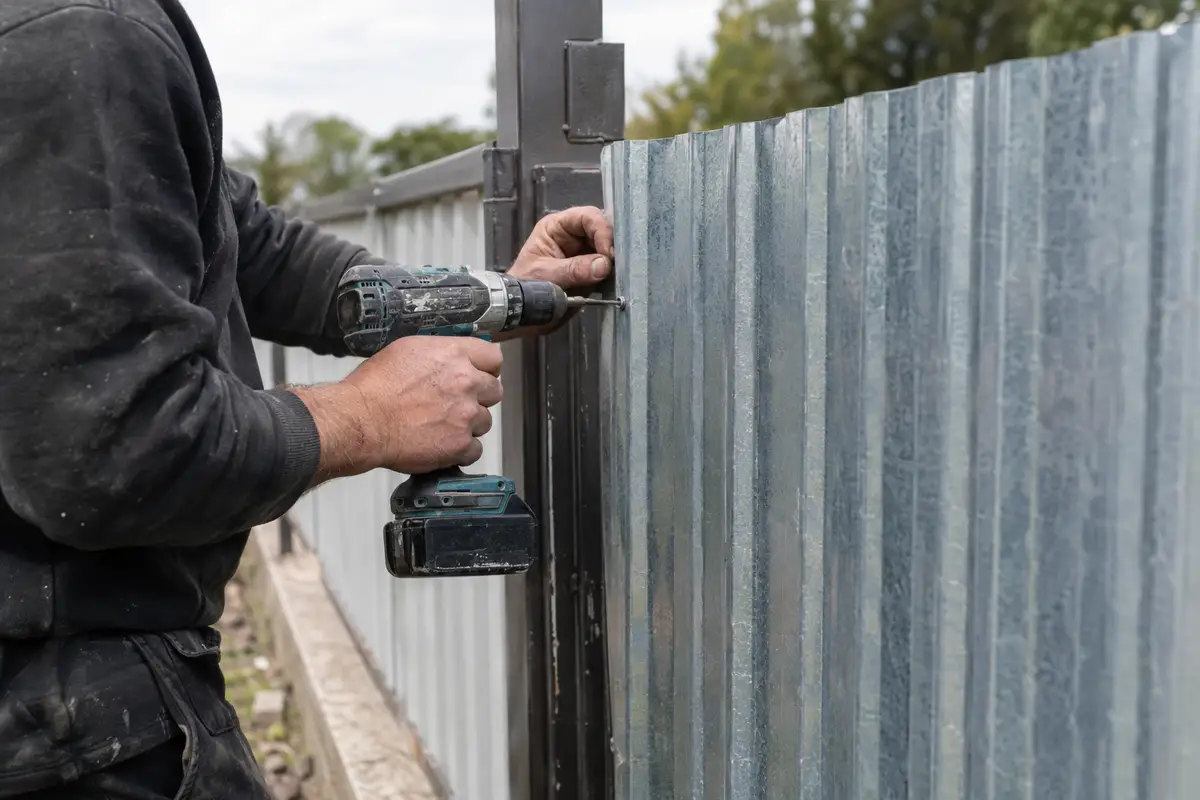
Yes, we install corrugated metal fences for houses, rental properties, farms, shops, and commercial yards. Tell us the property type and roughly how many feet of fence you need.
Yes, we cover the Grand Island, NE area. Send us the property address and we'll confirm.
We can usually schedule the job once the panels are on hand and the utility lines have been marked. Custom colors or cut lengths take longer to arrive, so tell us if you have a deadline.
We need the address, the approximate length and height, how many gates you want, and photos of the fence line. Mention any slope, trees, rock, or an old fence that has to come out.
No, as long as we can reach the fence line and you've approved the layout. It helps to be there when we stake the line and the gate locations.
Yes, in many towns. Fence permits usually cost $50 to $400, and some places cap solid fences at 6 feet in back yards and 4 feet in front yards. Your local building office decides, and we can tell you what's usually required.
Yes, some will, but many HOAs and historic districts require traditional wood or vinyl looks. Get written approval of the panel style and color before we order materials.
Yes, you need to know where the line is before we set posts. If the markers are missing or the line is in dispute, a boundary survey is the safe way to settle it.
No, we request the 811 locate before we dig. It's free and marks public utility lines, but not private ones like sprinklers or yard lights, so point those out to us.
Yes, we confirm the price before starting. If we hit rock, old concrete footings, or buried debris while digging post holes, we talk to you before doing any extra work.
Most residential fences take a few days. Posts go in first and the concrete needs time to set, then we build the frame and screw on the panels, so longer runs and gates add time.
Galvanized steel panels typically last 25 to 50 years, compared with about 10 to 20 for a wood privacy fence. A wood frame usually needs work sooner than the metal, so ask us about steel posts if you want the frame to last as long.
No, the upfront cost is about the same, typically $25 to $65 per foot. The savings come later, since metal panels need no staining and outlast wood boards by decades.
Yes, 6 feet is the most common height we build. It blocks sightlines into the yard and stays within the height limit many towns set for back yards.
Yes, where the local code allows it. Panels come up to 8 feet tall, but a taller solid fence catches more wind, so we use heavier posts set deeper in concrete.
Yes, we can run the panels vertically or horizontally. Tell us the look you want, since the direction changes how the rails and trim are laid out.
Yes, the most common build uses pressure-treated or cedar posts with 2x4 rails and trim boards holding the metal. Cedar costs more than treated pine.
Yes, we install steel post and rail systems where the panels bolt into metal channels. There's no wood to rot, but steel posts cost more than wood ones.
Yes, we install weathering steel panels that form a rust-brown patina on purpose. The runoff can stain light concrete for the first few months, so tell us what sits below the fence.
Yes, ribbed panels install the same way as rounded corrugated ones and look more modern.
Yes, we build or hang matching walk and drive gates. Gates usually add $300 to $1,500 each, and the gate posts get larger holes and more concrete than line posts.
Yes, we install customer-bought panels and kits. Send us the brand and instructions, and check whether posts are included, since some kits sell them separately.
Yes, if the old posts and rails are solid and straight. We can screw metal over the frame in place of the pickets, but rotted or leaning posts need replacing first.
Yes, we tear out the old fence and haul it away before building the new one. Removal usually adds about $5 to $15 per foot.
Yes, we step each section down the slope by the same amount at every post, or rack the frame to follow the grade. Stepping leaves small gaps at the bottom, so tell us if you have a dog.
Yes, when it's built for it. A solid metal fence catches wind like a sail, so on exposed sites we set the posts deeper and keep the height sensible.
Yes, salt air shortens the life of galvanized steel, especially at scratches and cut edges. Painted panels and regular fresh water rinsing help it last longer.
Yes, the metal panels won't burn, which is why some people choose them over wood. A wood frame still burns, so we suggest a steel frame or a metal section where the fence meets the house.
Yes, dark panels in direct sun can get hot to the touch. Lighter colors and bare galvanized stay cooler, so let us know if kids or pets will be up against the fence.
No, not much. It blocks the view, but thin metal doesn't absorb sound.
Yes, a 6 foot solid metal fence keeps most dogs in and stops them from seeing through. Tell us if your dog digs, since we can keep the bottom rail lower or add a buried barrier.
We usually use 26 gauge or heavier galvanized steel. A lower number means thicker metal, and the thinner 29 and 31 gauge retail sheets dent more easily.
We set them about a third of the post's height above ground, and below the frost line. A 6 foot fence usually gets holes 30 to 36 inches deep with gravel in the bottom and concrete around the post.
We use metal panel screws with neoprene washers, spaced evenly so the sheets don't rattle in the wind. The washer seals the hole and keeps water out.
Yes, only when we have to. A cut edge exposes bare steel that can rust, so we plan the layout around full panels and coat any cut edges we make.
No, we keep the panels and the bottom rail off the soil. Metal sitting in wet dirt or mulch rusts faster and a wood frame rots.
The frame usually faces your yard and the smooth metal faces out. If you want both sides finished, we can trim both sides of the rails in a good-neighbor style.
Yes, handy owners often do a short run over a long weekend. The hard parts are setting posts straight in concrete and handling sharp-edged sheets, so ask us about setting just the posts if you'd rather hang the metal yourself.
No, very little. Hose it off now and then, touch up scratches with a rust inhibitor, and check that the screws are snug. We keep a wood frame clear of the soil, so keep mulch from piling up against it.
Yes, galvanized panels can be painted after cleaning and priming with a primer made for galvanized metal. Factory-painted panels are the easier choice if you know the color you want.
